

Rebranding Without the Color Disaster: A Practical Guide for Brands and Printers
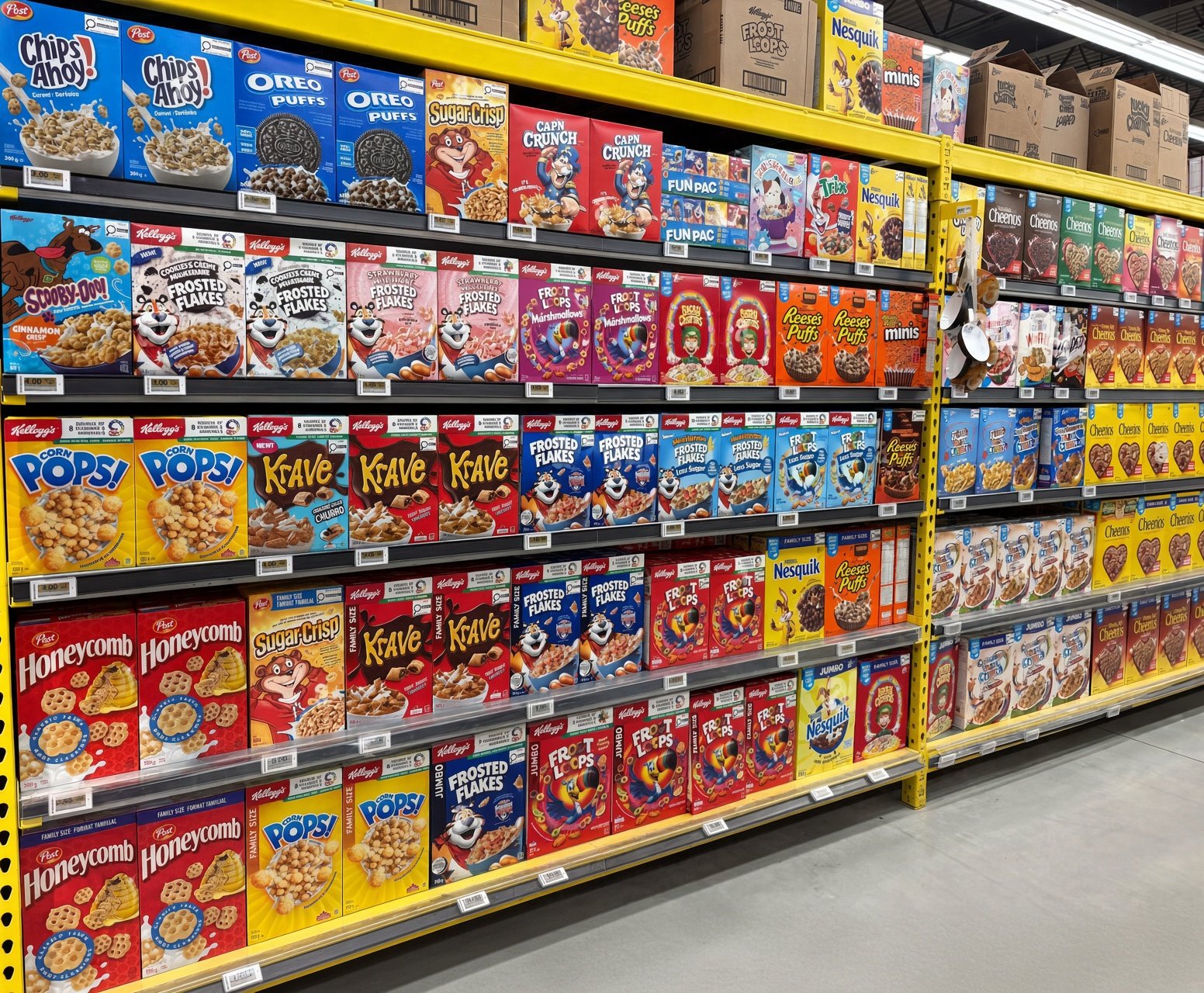
A rebrand is supposed to feel like a fresh start. New logo, new palette, new energy. Marketing teams spend months on the creative, agencies polish every detail, and leadership signs off with confidence.
Then the first production run hits the press.
The new red looks slightly off on the folding carton. The blue shifts under store lighting. One supplier nails it, another misses by a mile. Suddenly the “simple” rebrand becomes a cascade of rejections, delayed launches, and quiet panic in the supply chain.
Color is where most rebrands stumble. Not because the design is wrong, but because the transition from old to new is treated as a creative event instead of a controlled production process. At Mann & Co., we’ve helped brands navigate these transitions across packaging, direct mail, POS, and retail materials. The pattern is consistent: the brands that survive rebranding cleanly are the ones that treat color as a managed system from day one.
This guide walks through how to avoid the common disasters and keep your new identity intact across every printer and substrate.
Why Rebrands Break on Color
A rebrand changes more than a logo file. It changes the entire color ecosystem your brand depends on. Old Pantone references get retired. New spot colors get introduced. Existing CMYK builds need re-mapping. Substrates that worked with the old palette may not behave the same with the new one.
The problems usually surface in a few predictable places:
Supplier inconsistency — One printer interprets the new spec one way, another another. Without a single source of truth, “close enough” becomes the default.
Substrate shifts — A color that looked perfect on coated board may dull or shift on kraft, film, or recycled stock.
Metamerism — The new palette matches under the viewing booth but falls apart under retail LED or warehouse lighting.
Proof-to-press gaps — Soft proofs and contract proofs don’t match because the workflow wasn’t updated for the new color library.
Legacy material bleed — Old packaging, labels, or collateral linger in the market, creating a jarring mismatch between old and new.
None of these are creative failures. They’re process failures. And they’re avoidable.
Step One: Build the New Color Foundation Before Anything Prints
Don’t let the first production run be the first time anyone measures the new colors. Start with a documented, spectral-based color library.
Define every brand color with full reflectance data. Use PantoneLIVE, a custom spectral library, or equivalent. Lab values under a single illuminant are not enough — they hide metamerism and substrate drift. Spectral curves give printers the full picture.
Set hard tolerances. Specify Delta E 2000 targets (for example, ≤2.0 for primary brand colors, slightly looser for secondary tones), density aims, gray balance requirements, and trapping minimums. Include the lighting conditions that matter: D50 for press approval, D65 or LED for retail, TL84 for fluorescent environments.
Document the transition rules. Decide what happens to old colors. Are they retired immediately, phased out over a defined window, or kept for specific SKUs? Put it in writing so every supplier operates from the same playbook.
Involve the right people early. Marketing owns the creative, but procurement, packaging engineering, and legal need to be in the room. Supplier contracts will need updating, and the timeline has to account for qualification, not just design approval.
This foundation becomes the single source of truth. Everything downstream — proofs, press runs, audits — references it.
Step Two: Qualify Suppliers Against the New Standard
A rebrand is the perfect moment to reset your supplier base. Don’t assume your current printers can hit the new colors just because they hit the old ones.
Send a standardized test form. Include the new brand colors, gray balance patches, and a control target. Run it across your top three to five suppliers on the substrates you actually use. Measure the results against your tolerances.
Score and tier them. Platinum for full compliance, Gold for close with minor tweaks, and so on. Use this to decide who gets the launch volume and who needs remediation first.
Require the right certifications. G7 or G7+ for process control, GMI for retailer-facing packaging, and documented press fingerprinting for the specific press-substrate combinations you’ll be running. If a supplier can’t show recent verification data, they’re not ready for a rebrand launch.
Pilot before you commit. Run a small production batch of the highest-visibility item — the primary packaging, the hero direct mail piece — through your top supplier. Measure it, view it under the target lights, and get sign-off before scaling.
This step alone prevents the most common rebrand disaster: discovering a supplier can’t hit the new colors after the launch date is already set.
Step Three: Control the Proof-to-Press Chain
The new colors will only survive if every proof and every press run is calibrated to the same standard.
Update your proofing workflow. Soft proofs and contract proofs need to reflect the new spectral library and the actual substrate. A proof on the wrong stock or with an outdated profile will mislead everyone.
Require contract proofs on the real substrate. Not a generic proofing paper. The actual board, film, or label stock the job will run on. View those proofs under the same multi-illuminant conditions you’ll use for final approval.
Lock the RIP and workflow settings. Once a supplier is qualified, their press profile for the new colors should be the default. No ad-hoc adjustments on the fly. If a press drifts, it gets recalibrated — it doesn’t get “eyeballed” to match.
Set a clear approval protocol. Who signs off, under what lighting, with what measurement data. Make it objective. “It looks right to me” is how rebrands go sideways.
Step Four: Manage the Transition Window
Most rebrands don’t flip overnight. Old inventory, existing contracts, and staggered production schedules mean old and new colors coexist for weeks or months. That overlap is where the damage happens.
Define the phase-out timeline explicitly. Which SKUs switch first, which suppliers transition when, and what the cutoff date is for old colors. Communicate it to every partner in writing.
Audit the shelf during the transition. Pull samples from retail or distribution and check them under target lighting. If old and new are sitting side by side, the mismatch is visible to customers — and it erodes trust faster than a delayed launch.
Watch for metamerism between old and new. A new color that matches the old one under D50 but shifts under store LED will look like a mistake, not a rebrand. Test the transition pairs under multiple illuminants before they hit the market.
Have a rollback plan. If a supplier consistently misses during the transition, you need a qualified backup ready. That’s why the supplier qualification step matters — you should already have a tiered list.
Step Five: Lock It In with Ongoing Monitoring
A rebrand isn’t done when the first run ships. It’s done when the new colors are stable across every supplier, every substrate, and every lighting condition — and stay that way.
Require monthly verification prints from every active supplier. A simplified control target with the new brand colors, gray balance, and density patches. Log the results. Flag any drift above tolerance immediately.
Run quarterly audits. Pull shelf samples, review continuity scores, and meet with suppliers to address trends. Reward the ones who stay tight. Correct the ones who drift.
Update the color library as materials change. New ink batches, new substrate suppliers, new press installations — any of these can shift results. Keep the spectral data current and re-qualify when something material changes.
Tie compliance to contracts. Make the new color standards, reporting requirements, and tolerances part of every supplier agreement. Penalties for non-compliance, incentives for high scores. This is what turns a rebrand from a one-time event into a durable system.
Real-World Results
A national CPG brand we worked with was launching a full rebrand across packaging, labels, and POS materials. They had twelve suppliers worldwide and a tight launch window.
Before the program, they expected the usual chaos: multiple proof rounds, supplier disagreements, and at least one or two delayed SKUs. Instead, we helped them build a spectral color library, qualify suppliers against a standardized test form, and require G7+ certification plus monthly verification for the launch window.
The result: first-time approval rate on the new colors hit 91 percent. Only one supplier needed remediation, and it was caught in the pilot phase — not after launch. Shelf audits during the transition showed consistent scores above 90 percent, with no visible mismatch between old and new on the shelf. The launch stayed on schedule, and the brand avoided the rework costs that typically eat 5 to 8 percent of a rebrand budget.
Another client, a mid-sized packaging printer, was asked to support a major retailer’s rebrand. They fingerprinted their presses for the new palette, updated their G7+ curves, and implemented monthly verification tied to the retailer’s PQM requirements. Makeready on the new colors dropped 40 percent compared to the old palette, and they became the preferred supplier for the launch volume.
Common Pitfalls to Avoid
Approving colors under a single light. Always check under D50, LED, and TL84 before signing off. A match under one light is not a match.
Skipping spectral data. Lab values alone will hide metamerism. Use full reflectance curves.
Assuming old suppliers can hit new colors. Qualify them. Don’t trust reputation.
Rushing the proof-to-press chain. If the proof doesn’t match the press on the real substrate, the press will win — and the brand loses.
Forgetting the transition window. Old and new colors coexisting is normal. Unmanaged, it’s a disaster.
Treating the rebrand as a one-time event. Without ongoing monitoring, the new colors will drift within months.
Bottom Line
A rebrand is a controlled production event, not just a creative one. The brands and printers that get it right treat color as a managed system from the first proof to the last shelf audit. Build the spectral foundation, qualify suppliers against it, control the proof-to-press chain, manage the transition window, and lock it in with ongoing monitoring.
Do that, and your new identity shows up exactly as designed — on every substrate, in every store, under every light.
Ready to protect your rebrand with a color system that actually holds? Mann & Co. helps brands and printers build the standards, qualify suppliers, and monitor results so the new palette survives production.
Use the contact form or call us at (941) 259-2100.